Fitness
6 min read
Looking for a Safer Backyard Trampoline? Here's What Most Families Get Wrong
June 24 , 2026
By Fiona Craig
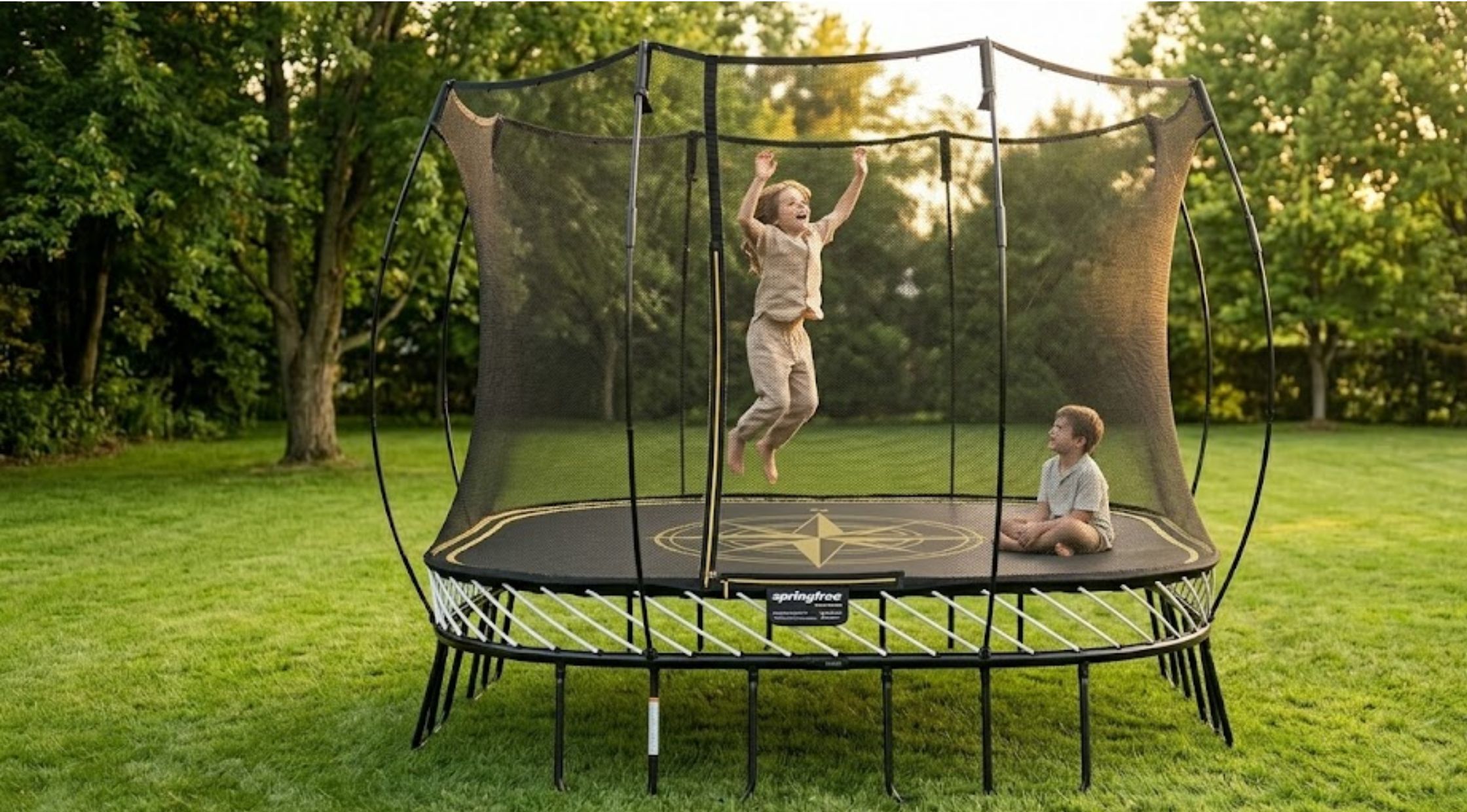
Purchasing a trampoline seems easy enough.
Purchasing a trampoline seems easy enough. You locate a model that suits your yard, evaluate several costs, and bring home what appears to be the finest choice.
However, the enthusiasm soon gives way to worry for a lot of parents.
A crucial point is frequently brought up by tales of pinched fingers, exposed springs, ripped safety pads, and unplanned falls: Is there a safer way to have fun on a trampoline without compromising performance?
You're not the only one who has been investigating the distinctions between trampoline springs and Springfree designs. More families are searching for safer alternatives to traditional trampolines that offer peace of mind while maintaining a high level of enjoyment.
The good news is that you can make a better long-term investment by being aware of a few important factors.
Common Problems Families Face with Traditional Trampolines
Hard Edges And Exposed Springs
The spring system itself is one of the main issues with traditional trampolines.
Over time, weather, wear, or heavy use can expose springs even with protective covering.
Safety Pads That Are Damaged
Safety pads disintegrate more quickly than anticipated, as many trampoline owners find out. Cracking and degradation can be brought on by exposure to the sun, rain, and temperature fluctuations.
Important protective barriers vanish when these pads deteriorate.
Netting That Fails
Over time, standard enclosure systems may droop, tear, or come free. Families may no longer receive the expected level of protection when a net loses tension.
Continuous Upkeep
To stay safe and operational, traditional trampolines frequently need routine maintenance, replacement parts, and inspections.
Parents who just want a dependable outdoor activity their kids can enjoy may become frustrated by these problems.
Why These Safety Issues Happen
Design is the primary cause.
Conventional trampolines are powered by metal springs that surround the jumping surface. These elements are useful for bounce performance, but when they are worn or made accessible, they may raise safety issues.
For this reason, families are becoming more involved in the trampoline spring vs. springfree system argument.
The jumping area is positioned right above the frame and springs in a conventional design. These elements are still a part of the overall design, even with safety features.
By completely removing many of these impact sites, contemporary springless systems use a new strategy.
Many homeowners are reassessing what they really need from a trampoline as safety regulations continue to change.
Practical Ways to Choose a Safer Trampoline
First, Assess The Design
Examine the trampoline's engineering before comparing costs.
Make inquiries like these:
- The impact points are placed where?
- What is the operation of the enclosure system?
- What occurs if a person lands close to the edge?
Frequently, the responses provide more information than advertising claims.
Examine Performance Beyond Bounce
Although bounce quality is important, safety should always come first.
A trampoline may not be the best value overall if it has great jumping performance but puts users at unnecessary risk.
Think About Long-Term Sturdiness
Outdoor gear is constantly exposed to:
Sunlight, Rain, Wind, and Temperature Variations
Over time, lower maintenance and replacement expenses can be achieved by selecting durable materials.
Examine The Enclosure System
A high-quality springfree trampoline net can play a significant role in preventing falls and improving user confidence.
A Smarter Alternative for Safety-Conscious Families
A popular choice for those looking for a more sophisticated solution is the Springfree Trampoline.
The concept makes use of flexible composite rods placed beneath the leaping surface in place of conventional metal springs. As a result, many of the typical impact zones present in traditional trampolines are eliminated.
Additionally, the company has created enclosure systems that are compatible with the actual trampoline construction. Instead of allowing interaction with hard frame components, a well-designed springfree trampoline net aids in guiding jumpers back toward the center of the mat.
This alternative method may seem like a worthwhile improvement for families who value durability and safety.
Why Many Families Consider the Springfree Trampoline 11x11
One popular model is the 11x11 springfree trampoline. Its square shape makes use of backyard space and gives kids and families a large jumping area.
The springfree trampoline 11x11 is often appealing to homeowners who want a balance between performance, footprint size, and safety-focused engineering.
Square trampolines can be particularly well-liked by energetic users because they usually offer a steady bounce over a greater area of the jumping surface.
Of course, the ideal size is determined by your family's demands and available space, but many customers find this format useful for daily use.
Benefits of Upgrading to a Springless Design
Improved Peace of Mind
Removing exposed springs addresses one of the most common safety concerns associated with traditional trampolines.
Reduced Maintenance
Advanced materials and integrated designs often require less upkeep over time.
Better Durability
Premium construction can help the trampoline withstand years of outdoor use.
Enhanced User Confidence
A well-designed springfree trampoline net can help users feel more secure while jumping, especially younger children.
Long-Term Value
While premium models may require a larger initial investment, many families view the added safety, durability, and reduced maintenance as worthwhile benefits.
This is one reason why Springfree Trampoline continues to attract buyers looking for a long-term backyard solution.
Trampoline Spring vs Springfree: Which Is Right for You?
The choice between springfree and trampoline spring systems ultimately boils down to priorities.
Conventional trampolines could be less expensive initially, but they frequently need more upkeep and depend on parts that could have negative effects.
The goal of springless designs is to lower those hazards by using other engineering techniques.
Springfree Trampoline's solutions are frequently worthwhile for families who prioritize long-term value, durability, and safety.
Conclusion: Make a Smarter Backyard Investment
A trampoline can provide years of outdoor fun, exercise, and family memories. But choosing the right model requires looking beyond price tags and promotional claims.
By understanding the differences between trampoline spring vs springfree designs, evaluating enclosure systems, and considering long-term durability, you can make a more informed decision.
Whether you're researching a springfree trampoline 11x11, comparing enclosure options like a springfree trampoline net, or simply looking for a safer backyard experience, investing in thoughtful design can make a significant difference.
The best trampoline isn't always the cheapest one, it's the one that helps your family enjoy years of fun with greater confidence and fewer worries.
live smarter
Shop smarter, live better, and stay ahead of the trends with our reliable recommendations!




trending
Fitness
6 min read
How to Build a Home Gym You'll Actually Use: Smart Equipment Choices That Deliver Results
Lifestyle
6 min read
Why Your Bed Doesn't Feel Right: Simple Fixes for Common Bed Frame Problems
Health & Beauty
6 min read
Why Your Current Skincare Routine Isn't Working: How to Choose the Right Anti-Aging Products in Your 30s
Fashion
6 min read
Style That Speaks Louder Especially for Men
Travel
6 min read
Unforgettable Adventure Trips for Women at Explorer Chick: Alaska, Belize, and South Africa
Technology
4 min read
SafeWill Write Your Will Online Easily and Affordably
Food
5 min read
Our Place Where Aesthetics Converge with Function in the Modern Kitchen
Sports & Fitness
6 min read
Boost Your Potential with an Onnit Discount
N/A
8 min read
Boost Your Focus And Brainpower With Onnits Alpha BRAIN Line
Skincare
6 min read
Fresh Glowing Skin oral products at Foreo
Pets
4 min read
Find A Pet to Improve Your Lifestyle
Comment:
Your email address will not be published. Required fields are marked *